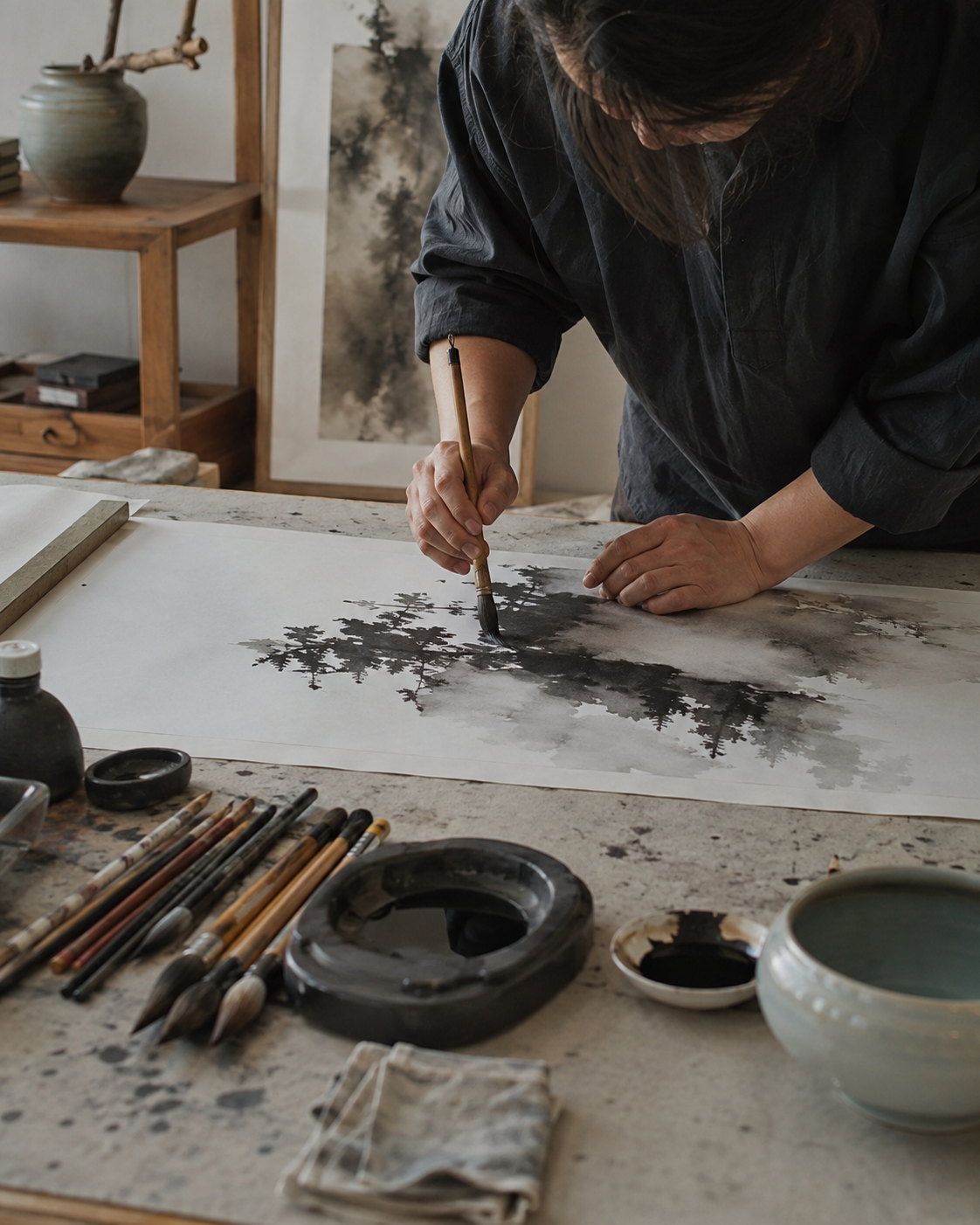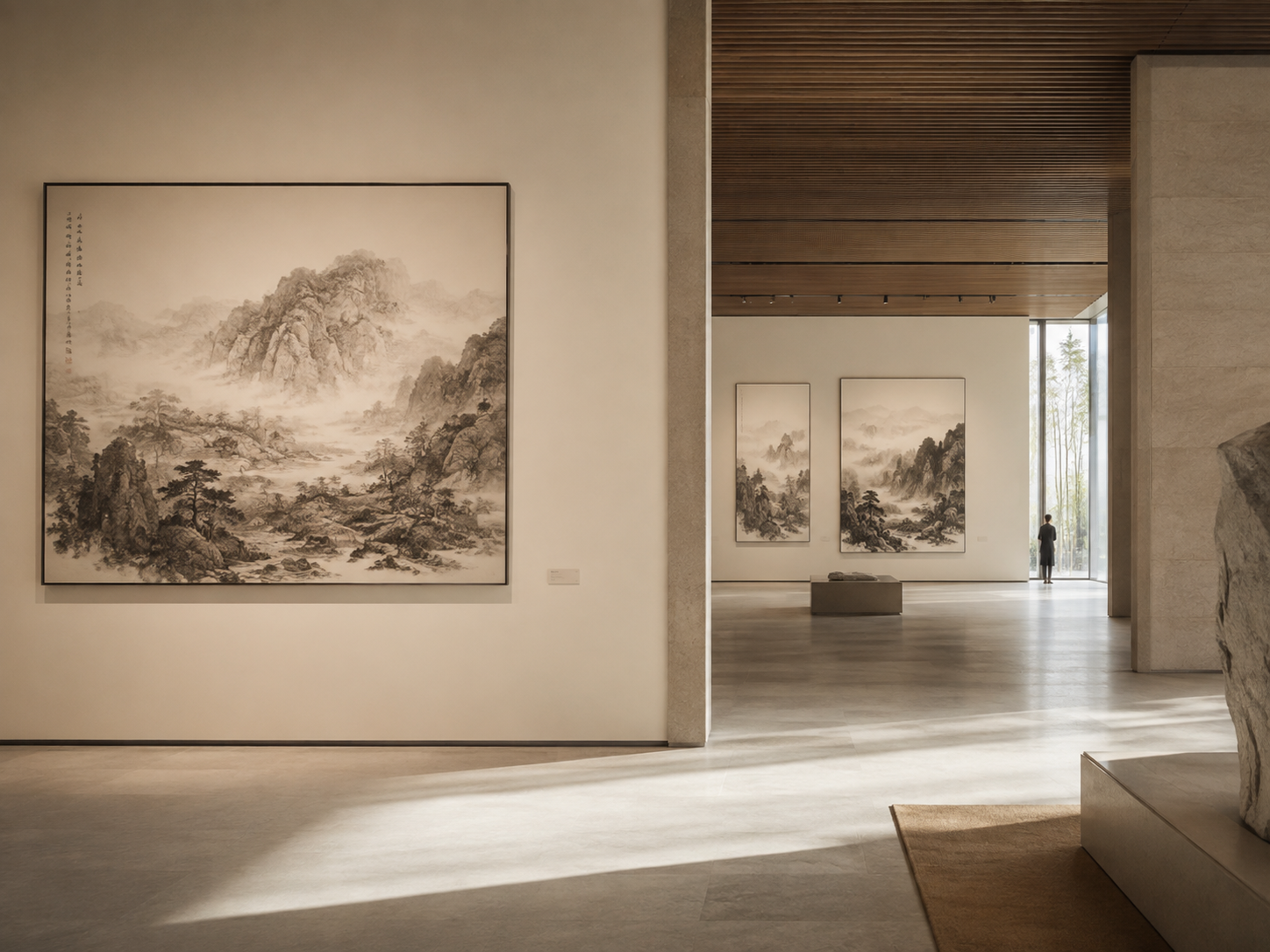
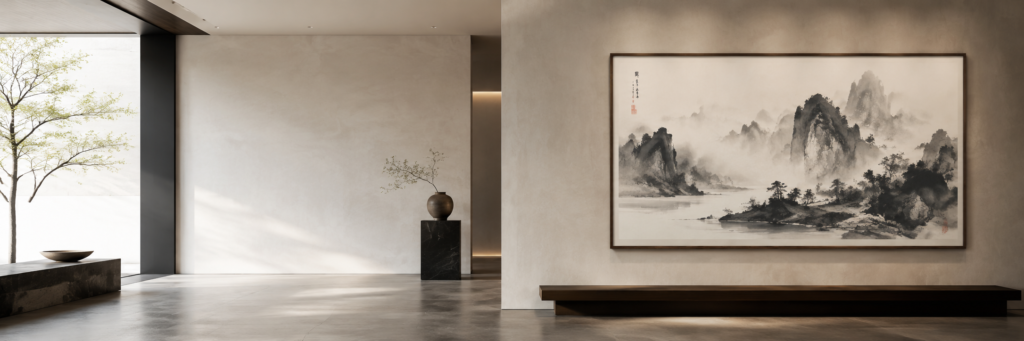
An artwork changes when it enters a lived space.
In a gallery, walls are intentionally neutral and lighting is carefully controlled. At home, an artwork exists alongside furniture, architecture, daylight and the rhythm of everyday life.
This does not diminish the work. In many cases, it allows a different relationship with it to develop.
Chinese painting can work particularly well in contemporary interiors because its visual language often combines detail with openness. The challenge is not simply finding an empty wall, but understanding how scale, light and surrounding space affect the experience of the artwork.
Scale is one of the first decisions to consider.
A large horizontal work can create a strong architectural relationship above a console, sofa or low cabinet. A tall vertical work may suit a narrower wall, reading corner or transitional space. Smaller works can create more intimate moments when viewed at close distance.
The artwork does not always need to fill the available wall.
Leaving generous negative space around a work can reinforce the sense of quiet already present within many Chinese compositions.
As a general principle, think about the relationship between the work and the furniture beneath or beside it rather than treating wall dimensions alone as the deciding factor.
A work that contains delicate brushwork may invite close viewing, but it should also feel balanced from across the room.
Before deciding on placement, consider the main points from which the artwork will be seen.
A painting opposite an entrance may become one of the first things noticed when entering a room. A work beside a chair or desk creates a more private relationship and may reveal itself slowly over time.
Neither approach is inherently better. The right choice depends on how you want the artwork to participate in the space.
Natural light changes throughout the day, and with it the appearance of an artwork.
Soft indirect daylight can reveal the texture of paper, silk or canvas and make subtle tonal variations easier to see. Strong direct sunlight, however, should generally be avoided for the long-term preservation of original works.
Rather than placing an artwork directly opposite intense sunlight, consider walls where light arrives indirectly.
The goal is not museum-style illumination at every moment. It is to allow the work to remain visible and materially protected while responding naturally to the atmosphere of the room.
The relationship between artwork and wall is shaped by its presentation.
Some contemporary Chinese works benefit from traditional mounting, while others work well in restrained contemporary frames. Frame colour, mount depth and surrounding margins can all change the perceived scale of the work.
A simple presentation often allows the artwork’s material qualities to remain central.
Rather than choosing a frame as a decorative object in isolation, consider how it connects the work to surrounding architectural materials such as wood, stone or plaster.
One of the easiest mistakes is to place too many visual elements around an artwork.
If a painting already contains complex brushwork, nearby decorative objects can compete with it. Conversely, a very minimal work can benefit from a few carefully chosen materials or objects that create balance without imitation.
You do not need to create a themed “Chinese” interior around Chinese art.
In many contemporary spaces, the most successful approach is the opposite: neutral architecture, natural materials and enough visual space for the artwork to retain its own identity.
The strongest placements often become less noticeable in an immediate sense.
The artwork stops feeling like something newly installed and becomes part of the room. You encounter it at different times of day, from different distances and in different moods.
This ongoing relationship is fundamentally different from seeing a work once in a gallery or online.
Choosing art for a home is therefore not only a matter of decoration. It is a decision about what you want to continue looking at.
Explore our collection of original contemporary Chinese artworks for modern living.