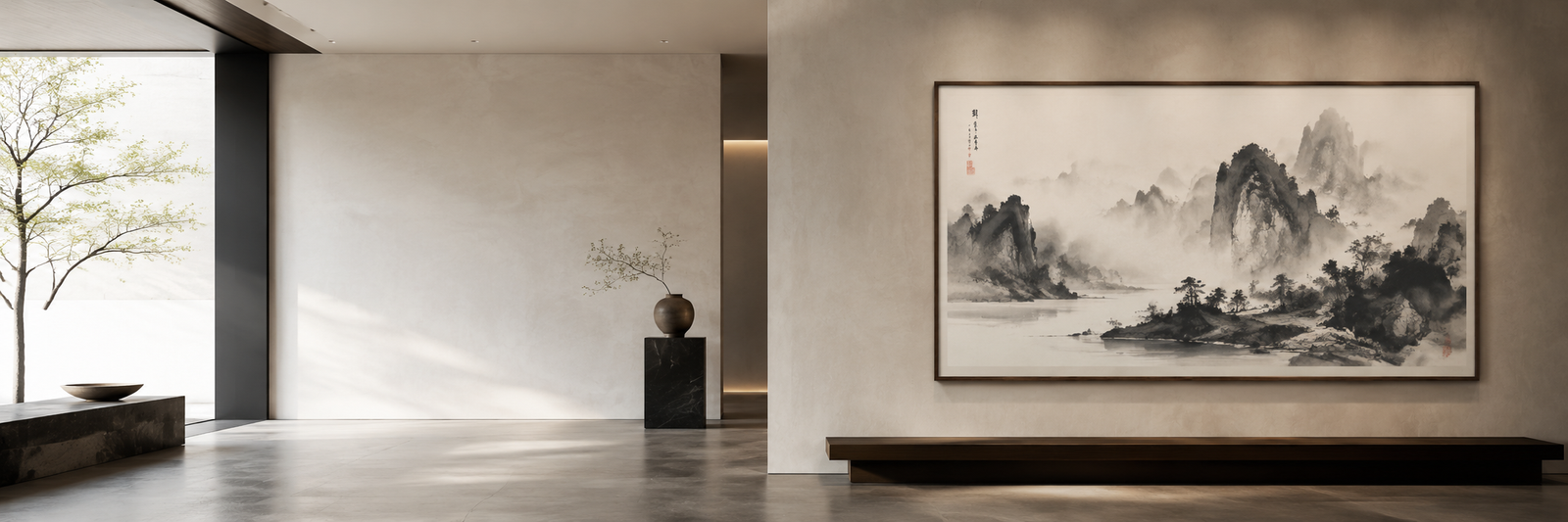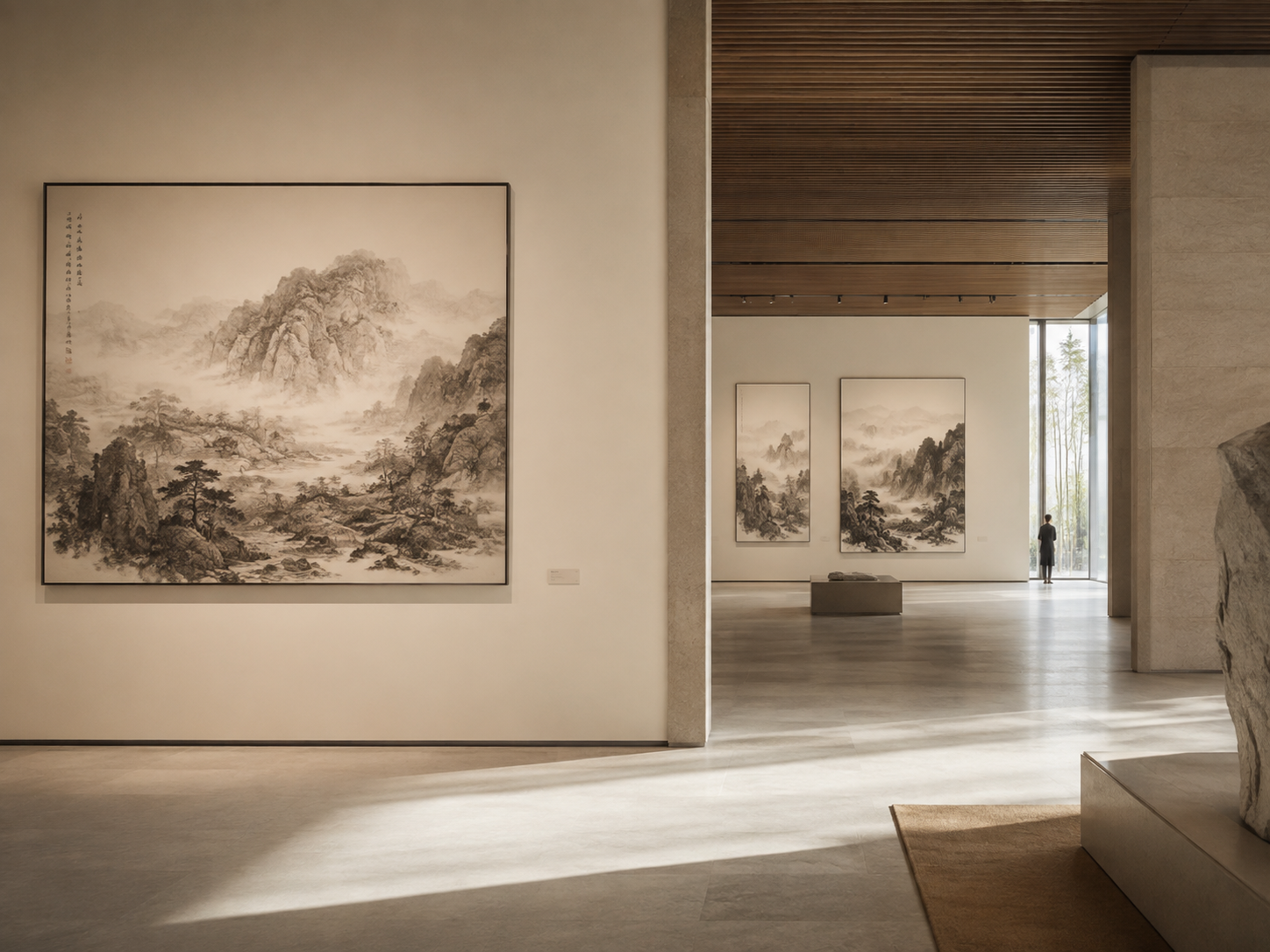
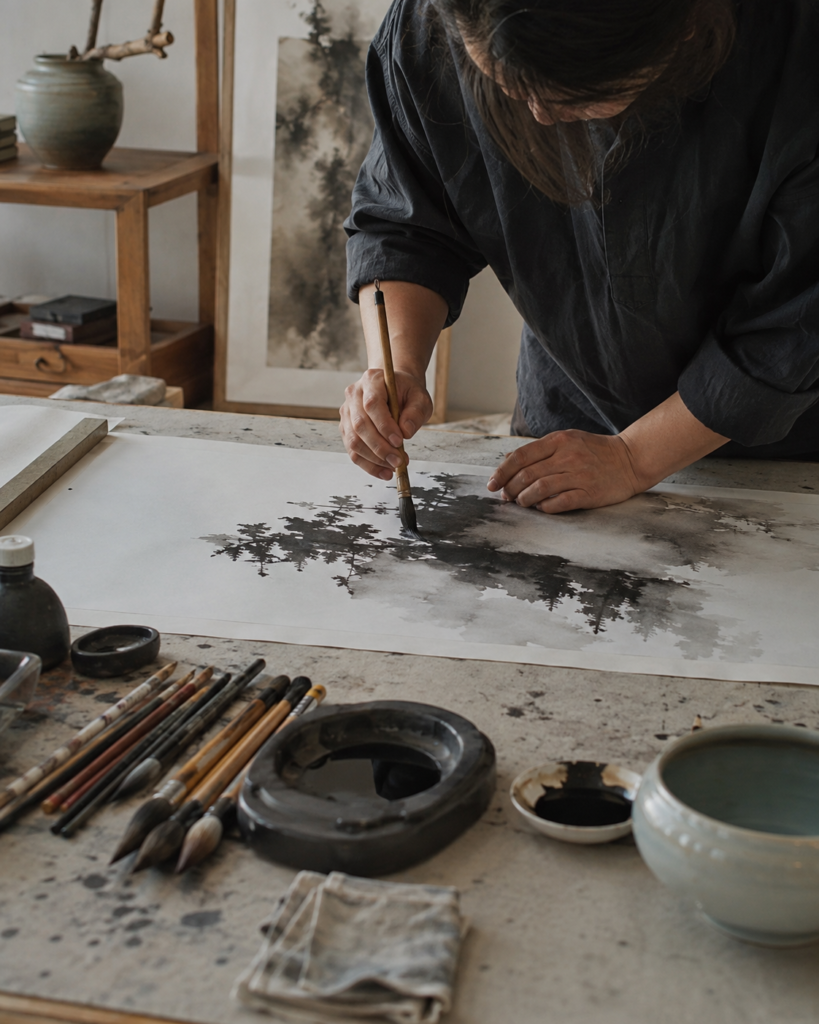
Before a finished work reaches a wall, there is a quieter stage of making that is rarely seen.
Paper is prepared. Brushes are selected. Ink is mixed with water until the tone feels right. The artist may spend long periods looking before making the first mark.
For many artists working with Chinese painting materials, the process is shaped by a combination of discipline and uncertainty. The tools are traditional, but every work begins without a guaranteed outcome.
Xuan paper reacts immediately to moisture.
Unlike a heavily prepared canvas, it absorbs ink into its fibres, allowing a brushstroke to spread, soften or change character within seconds. The surface remembers pressure, speed and the amount of water held in the brush.
This makes each gesture difficult to separate from the moment in which it was made.
A dark line can be deliberate and controlled, while a pale wash may move beyond the artist’s original intention. The relationship between control and accident becomes part of the work itself.
Traditional Chinese brushes can create enormous variation from a single tool.
The same brush may produce a fine line, a dry textured mark or a broad wash depending on angle, pressure and speed. Rather than simply applying pigment, it records movement.
This is one reason brushwork can feel so physical even in a restrained painting.
A small change in the wrist can alter the character of a line. A pause may create a heavier deposit of ink. A fast gesture may leave parts of the paper exposed between individual fibres of the brush.
The mark becomes evidence of movement.
Black ink is rarely experienced as a single black.
Mixed with different quantities of water, it produces a spectrum ranging from dense, almost reflective darkness to barely visible grey. Artists may prepare several tonal strengths before beginning a work, or adjust them continuously as the painting develops.
These variations create depth without relying on conventional colour.
In landscape painting, a single ink may describe a foreground rock, a distant mountain and atmospheric mist simply through changes in concentration and brush handling.
The most visible part of studio practice is the act of painting, yet much of the process involves observation.
An artist may stop repeatedly, move away from the work and return to it later. This distance allows relationships between marks to become clearer.
In a practice where a single gesture can significantly alter the composition, knowing when not to add another mark can be as important as making one.
This sense of restraint is often visible in the finished work.
Materials matter because they shape possibilities.
Paper absorbs. Ink spreads. Brushes resist or bend. The artist works with these behaviours rather than treating them as passive tools.
Understanding this process changes the way we look at a finished painting. A pale area is no longer simply pale; it may be the result of carefully controlled water. A dry line can reveal the speed and pressure of the brush. An apparently empty area may have been one of the most deliberate decisions in the composition.
The finished artwork may appear quiet, but the process behind it is full of movement, attention and choice.
Explore our artists and discover the practices behind the works in the collection.